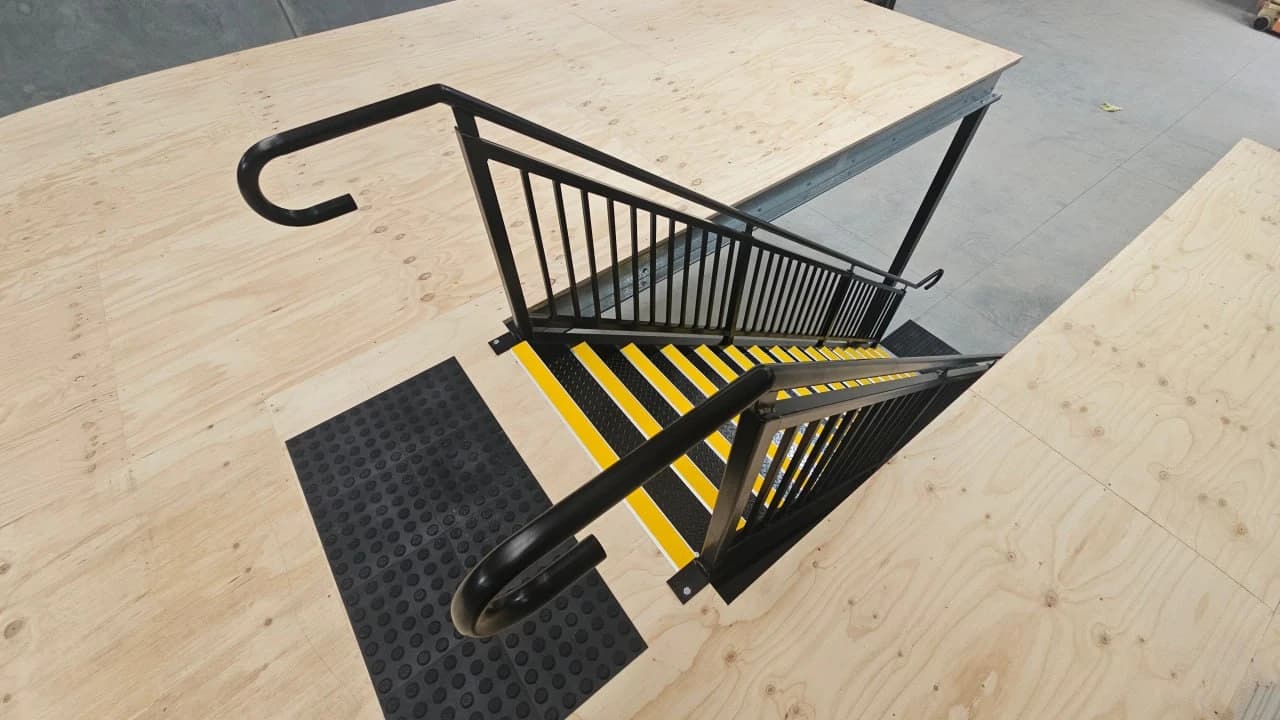
Mezzanine Stairs And Access On The Gold Coast
Safe Access Every Day
Our Gold Coast team builds mezzanine stairs, landings, handrails and pallet gates to suit the height of your floor and how much they will be used. A mezzanine is only useful if people can get onto it safely. Stairs, landings, handrails and edge protection are the first things an inspector checks, and your team uses them every day.
Get A Mezzanine Floor Quote
Tell us where it is and roughly how big, and we'll get back to you with a rough price.
Or call 07 2802 4421
Engineer Certified
Every floor comes with engineer certified drawings
Our Own Team
We measure the site and we install it
Gold Coast To Brisbane
Coomera and Yatala through to Logan and Ballina
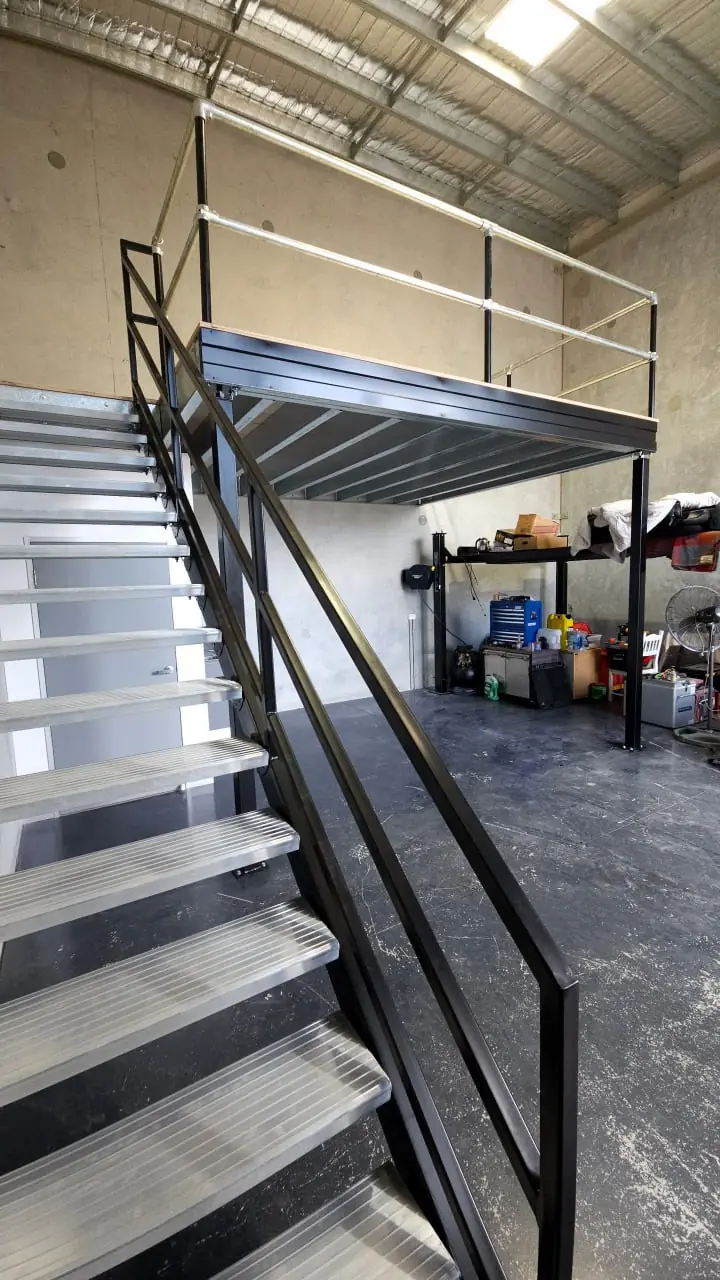
What Mezzanine Access Involves
We build steel stairs to suit your floor height and how busy they will be, with the landing placed where it does not take up floor space you need. Handrail and kick rail run along the full open edge.
The angle of the stair matters. If it is too steep, people climb it sideways holding the rail. If it is too shallow, the stair takes up too much of the floor you just paid for. We get the angle right on the drawing, so the stair does not have to be cut out and rebuilt later.
- Steel stairs, stringers (the side beams) and landings sized to your floor height and use
- Handrail, mid rail and kick rail along every open edge
- Pallet gates and swing gates where stock is lifted up
- Stairs and guardrail added to an existing mezzanine
Send us the size of your building and what you want to use the mezzanine floor for, and we will tell you what will fit.
Get A Mezzanine Floor QuoteA Stair Your Team Will Actually Use
A good stair is one your team can carry a box up without thinking about it. If it is too steep, people turn sideways and hold the rail. If it is too shallow, the stair runs so far into the building that it takes up the floor space you just paid for.
The angle decides this, and the best range is 30 to 38 degrees. Any steeper and it starts to feel like a ladder, and people avoid using it.
At the right angle, each step is deep enough for a whole boot. Every step is also the same height, because one uneven step is what trips people up.
Stair Width, Handrails And AS 1657
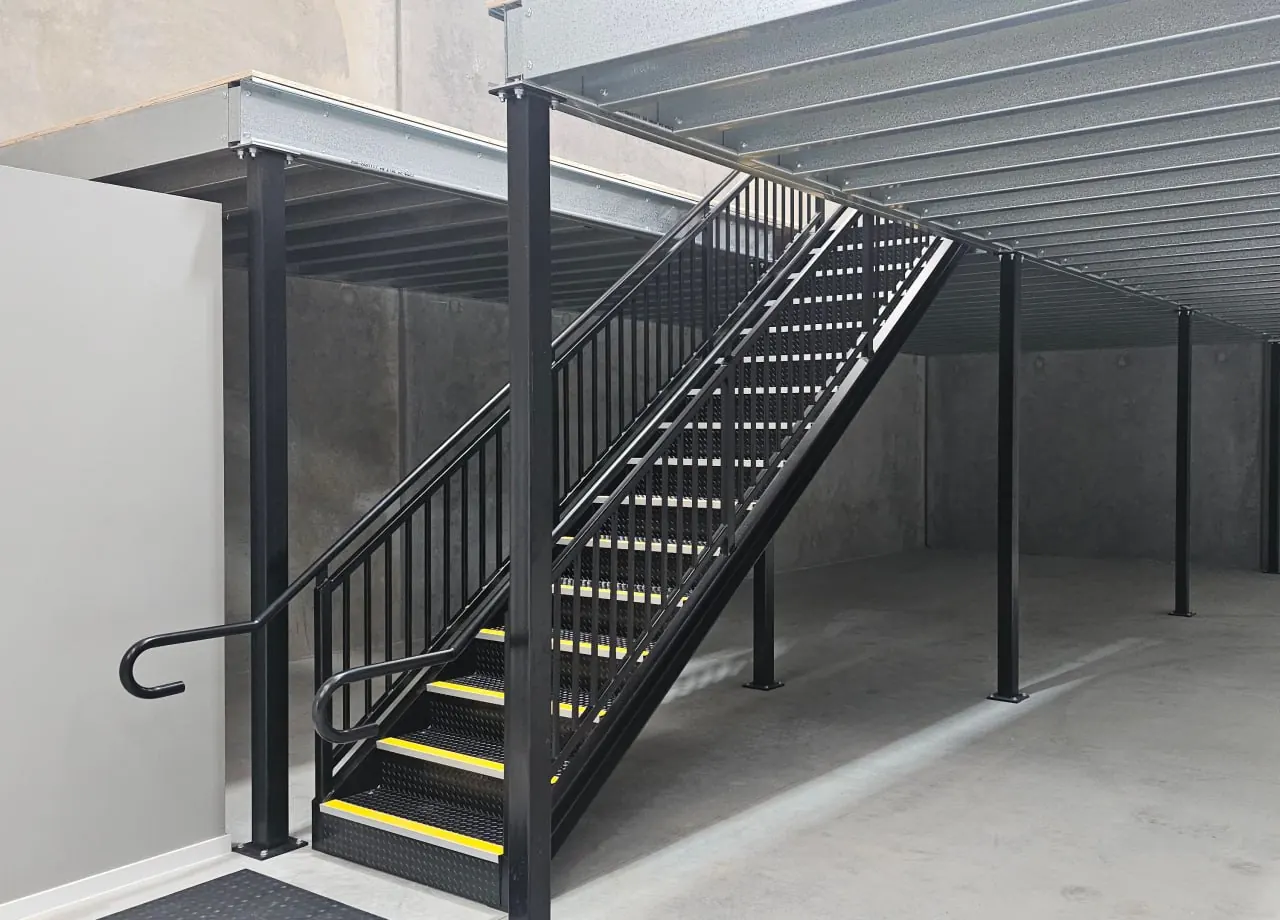
The angle, the steps and the rails are all covered by AS 1657, the Australian standard for industrial stairs and platforms, and we build to it on every job.
How Many Handrails
- A stair under a metre wide needs one handrail.
- A stair a metre or wider needs two.
- So if you want a wider stair so people can pass each other, it also needs a second handrail. It is cheaper to plan that at the site measure than to add a rail later.
When The Building Code Applies Instead
Tell us at the site measure what the stair will be used for. If there is an office upstairs, or people would use the stair as a way out of the building, the building code applies instead and the rules are different. It is much cheaper to know that before the steel is cut.
When A Stair Needs A Landing
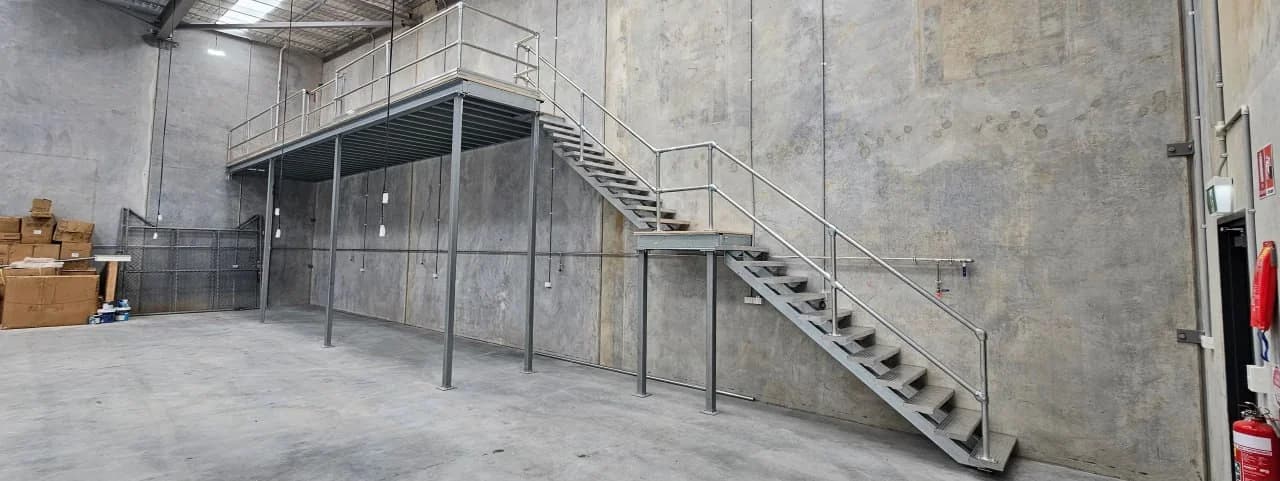
A stair can have up to seventeen steps (rises) in a row. After that, it needs a landing.
The Rules The Stair Has To Meet
- A mezzanine as high as a second storey may need more than one landing, or a lift instead, and both take up floor space.
- The steps have to be the same height to within a few millimetres. If three steps in a row vary by more than about seven millimetres, the stair fails inspection.
- Fixing them usually means adjusting the whole stair, which is why we measure the height from the finished floor on site instead of taking it off a drawing.
How We Build It
We measure the real height from floor to floor, and send that measurement to the welding shop that makes our steel stringers (the side beams of the stair).
The treads come from our aluminium supplier, already cut to the width of the stair. Everything arrives ready and is bolted together on site, so the stair does not hold up the rest of the job.
Handrail, Mid Rail And Kick Rail Along Every Open Edge
Any edge a person could walk off needs a rail, and it runs along the whole open side, not just the busy part. The rail sits at about a metre high, and higher again where the drop is bigger.
A second rail (the mid rail) goes in underneath. Without it, someone could fall under the top rail, and it is the first thing an inspector will pick up.
The kick rail is the low rail at floor level, and it is often forgotten. It stops a dropped tool or box from going over the edge onto someone below.
Retrofitting Stairs And Guardrail To An Existing Mezzanine
This is the most common call we get. A business moves into a building that already has a mezzanine, and finds it has a ladder instead of a stair, or no guardrail along the edge.
We measure what is there, tell you what it needs, and build the stairs and rails onto it. Stairs, handrail and mid rail bolt to the existing edge beam, so the floor structure is not changed and you can keep using the floor while we work.
It is almost always cheaper than people expect, and it means your team can safely use space that was sitting empty.
Loading A Mezzanine Without Standing At An Open Edge
Wherever a forklift lifts stock onto a mezzanine, the edge has to open. That is when safety matters most, so it needs to be designed properly. The key question is what keeps your people away from the drop while the edge is open.
Pallet Gates
- A pallet gate fences off the loading area from the rest of the floor.
- While the edge is open for the forklift, the person waiting for the load stays behind a steel barrier.
- Once the pallet is down and stable, one movement of the gate closes the edge and opens the loading area to your team, so there is nothing extra to remember.
Swing And Sliding Gates
Swing gates and sliding gates are simpler and cheaper. They suit floors where stock is loaded less often, and where your safety procedure keeps people back while the edge is open.
We will work out which one suits the way you move stock, and where it should go so the forklift is not reversing into an aisle.
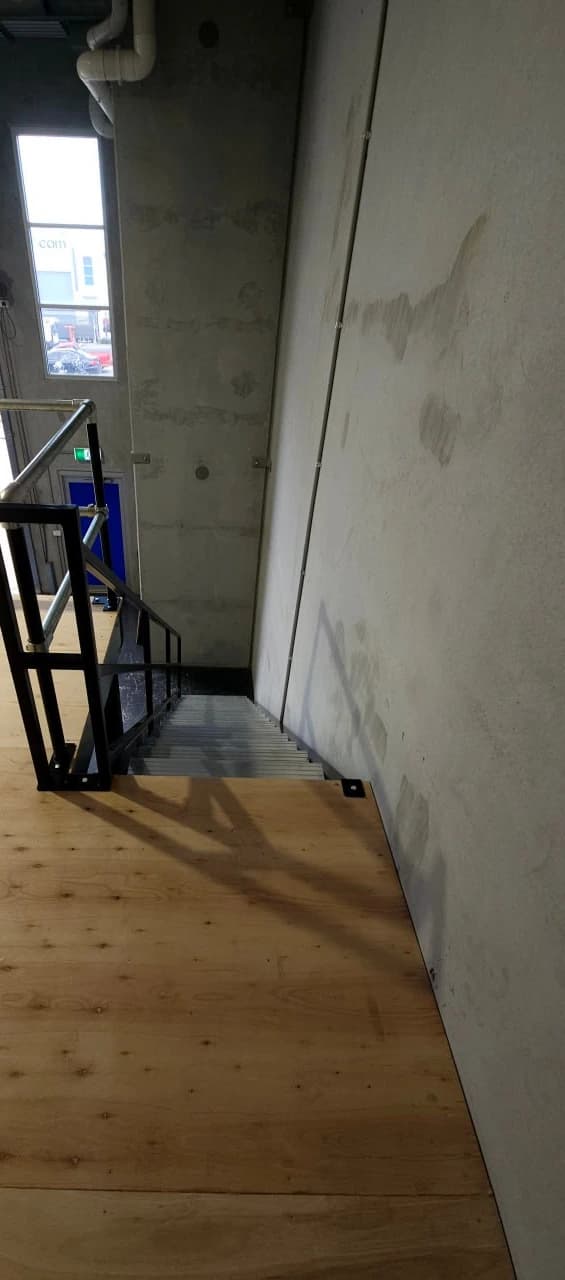
Mezzanine Stairs Questions
These are the questions we get asked most often. Click on a question to see the answer.
Can you add handrail to a mezzanine we already have?
Yes, and it is one of the jobs we do most. We measure the existing edge, have the handrail, mid rail and kick rail made to suit it, and fit them without altering the floor structure underneath. Handrail is priced by the metre, so the price depends on how long the edge is.
What is AS 1657, and does it apply to us?
It is the Australian standard covering stairs, walkways and edge protection on industrial platforms, and it is what a safety inspector or your insurer will check your mezzanine against. In plain terms it sets how steep a stair can be, how wide, and what has to run along an open edge.
If your mezzanine is for storage or for access to machinery (plant), this is the standard that applies. If there is an office up there, or people would use it to leave the building, the National Construction Code applies instead. We work out which one you are under before we quote.
How many steps before a stair needs a landing?
Seventeen steps (rises) is the limit. After seventeen, a landing goes in. A mezzanine as high as a second storey usually needs more than one landing, or a lift instead. It is worth deciding early, because a landing takes up floor space.
Does a stair need one handrail or two?
It depends on the width. A stair under a metre wide needs one handrail, and a stair a metre or wider needs two. If people pass each other on the stair all day, you will want the extra width and the second rail anyway.
What are the treads made of?
Normally aluminium. Our supplier cuts them to the width of the stair, and we bolt them onto welded steel stringers. If your job needs something else, such as steel grating or checker plate, we sort that out at the site measure.
Should a mezzanine have a ladder or stairs?
Stairs, in almost every case where people go up and down during the working day. A ladder only suits occasional access, such as to equipment or storage nobody visits every day. If your team uses the mezzanine regularly, it needs a stair.
Do we need a gate where the forklift lifts stock up?
Yes. You need a barrier between your staff and the open edge the whole time stock is being lifted, and a pallet gate is the usual answer. A chain across an open edge is not enough.
Where should the stairs land?
Somewhere it does not take up useful floor space or come out into a forklift aisle. It is worth planning where the stair lands at the drawing stage, because moving it later means cutting steel.
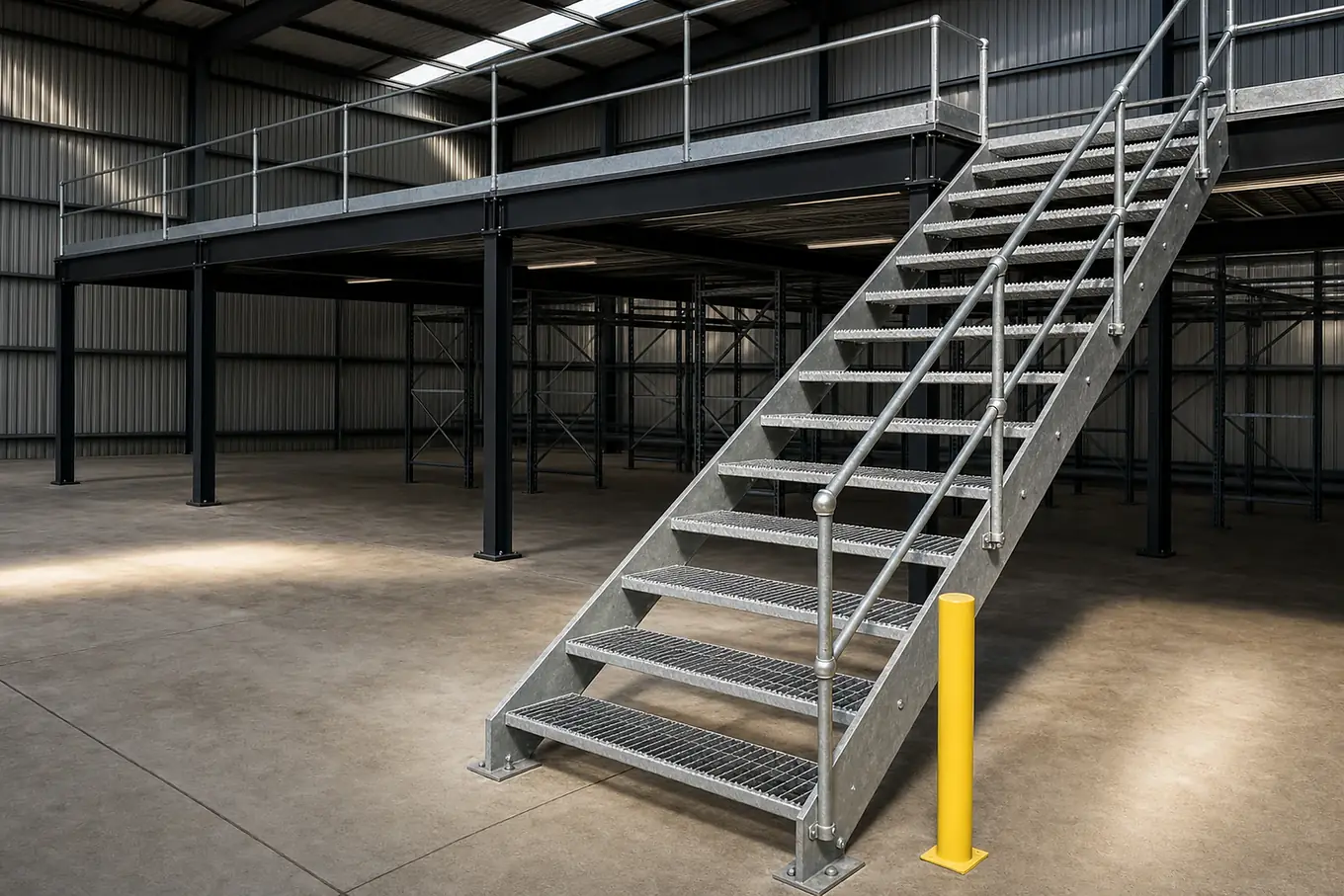
Related Services
Mezzanine Floors
A raised structural steel floor built to the shape of the building you already lease.
Warehouse Mezzanines
Extra floor space for picking, packing and storage, without getting in the way of dispatch.
Handrail Installation
Handrails, banisters and balustrade on new or existing stairs, at home or at work, with or without a mezzanine.
Still Working It Out?
Tell Us Where The Stair Has To Land
Send us the height to the mezzanine floor and a photo of where the stair will come down. We will tell you how long the stair needs to be and what it will take to make it compliant.
- When We Answer
- Monday to Friday, 6am to 4pm
- Where We Build
- Coomera and Yatala through to Logan and Ballina
- What To Have Ready
- The height to the deck, the floor it has to land on, and whether anything is in the way.